

As a leading face base supplier, I've witnessed firsthand the challenges and intricacies that come with formulating products that can handle different lighting conditions. In the world of cosmetics, lighting is not just a backdrop; it's a critical factor that can make or break the appearance of a face base. Whether it's the harsh glare of sunlight, the soft glow of indoor lighting, or the unforgiving flash of a camera, a high - quality face base must adapt seamlessly.
Understanding the Impact of Different Lighting Conditions
Natural Sunlight
Natural sunlight is perhaps the most unforgiving lighting condition. It has a wide spectrum of colors and high intensity, which can expose every flaw in a face base. Under direct sunlight, a face base that looks good indoors may appear too shiny, cakey, or have an unnatural color. The UV rays in sunlight can also cause the face base to break down over time, leading to uneven fading and a change in texture.
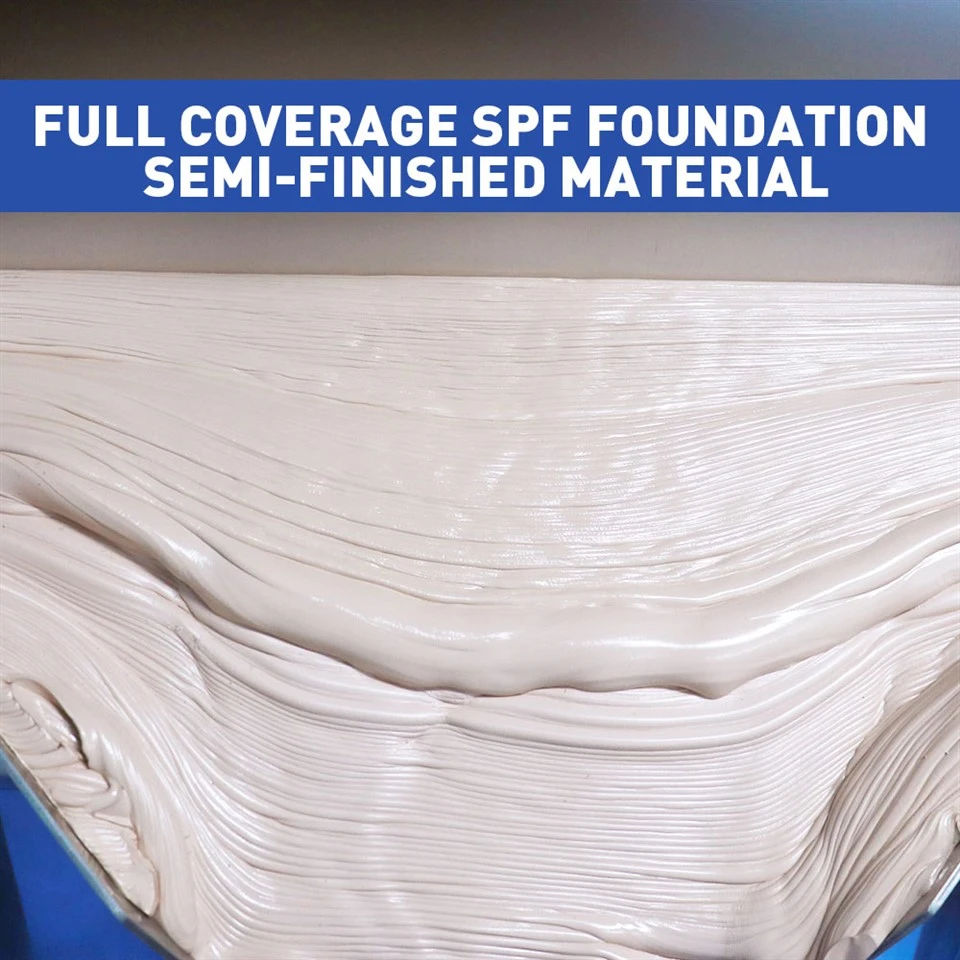
For example, if a face base contains too much oil, it will reflect the sunlight, making the skin look greasy. On the other hand, a face base that is too matte may look dry and flaky in the bright sunlight. To address these issues, our Full Coverage Spf Foundation Semi - finished Material is formulated with a balanced blend of ingredients. The SPF component not only protects the skin from UV damage but also helps to maintain the integrity of the face base under sunlight. The full - coverage formula conceals imperfections while still allowing the skin to breathe, preventing that greasy or cakey look.
Indoor Lighting
Indoor lighting can vary greatly, from the warm, yellowish glow of incandescent bulbs to the cool, white light of fluorescent lights. Each type of indoor lighting can affect the way a face base appears on the skin. Incandescent lighting tends to add a warm tone to the skin, so a face base that is formulated for this type of lighting should have a slightly cooler undertone to balance it out. Fluorescent lighting, on the other hand, can make the skin look dull and washed out, so a face base that provides a bit of radiance can be beneficial.
Our Oily Skin Pore Minimizing Foundation Formulation is designed to work well under different indoor lighting conditions. It contains ingredients that help to minimize the appearance of pores, which can be more noticeable under certain types of indoor lighting. The formulation also provides a natural - looking finish that adapts to the color temperature of the light, ensuring that the skin looks healthy and vibrant.
Camera Flash
In today's age of social media and selfies, the camera flash is a common lighting condition that face bases need to handle. A camera flash can be very harsh and can make a face base look white or ashy. This is because the flash has a different color temperature than natural or indoor lighting. To combat this, a face base should have a good balance of pigments that can reflect and absorb light in a way that looks natural under the flash.
Our OEM Satin Water Proof Foundation Base is an excellent choice for those who are often in front of the camera. The satin finish provides a soft, flattering look that is not overly shiny or matte. The water - proof feature ensures that the face base stays in place, even under the pressure of a camera flash and the stress of a long day.
Technical Approaches to Handle Different Lighting
Pigment Selection
The choice of pigments is crucial in formulating a face base that can handle different lighting conditions. Pigments need to be carefully selected based on their color, opacity, and ability to reflect light. For example, some pigments are better at reflecting light in a way that gives the skin a natural glow, while others are more opaque and can provide better coverage.
We use a combination of organic and inorganic pigments in our face bases. Organic pigments are known for their vibrant colors and good color payoff, while inorganic pigments, such as titanium dioxide and zinc oxide, are excellent at providing coverage and protecting the skin from UV rays. By carefully blending these pigments, we can create a face base that looks good under all types of lighting.
Texture and Finish
The texture and finish of a face base also play a significant role in how it looks under different lighting. A thick, heavy - textured face base may look good in low - light conditions but can appear cakey and unnatural in bright light. On the other hand, a lightweight, fluid face base may be more suitable for bright sunlight but may not provide enough coverage in dimmer lighting.
We offer a range of textures and finishes to meet the needs of different customers and lighting conditions. Our satin finish, for example, provides a smooth, velvety look that is suitable for both indoor and outdoor lighting. The semi - matte finish is a good option for those who want a natural - looking finish with a bit of shine, while the full - matte finish is ideal for oily skin and bright lighting conditions.
Light - Reflecting and Absorbing Ingredients
In addition to pigments, we also use light - reflecting and absorbing ingredients in our face bases. These ingredients can help to enhance the appearance of the skin under different lighting conditions. For example, mica is a common light - reflecting ingredient that can give the skin a subtle glow. It reflects light in a way that makes the skin look smoother and more radiant.
On the other hand, ingredients like charcoal can absorb excess oil and light, which can be beneficial in bright lighting conditions. By using a combination of these ingredients, we can create a face base that adapts to the lighting environment and provides a flawless look.
Testing and Quality Assurance
To ensure that our face bases can handle different lighting conditions, we conduct extensive testing. We test our products under various types of lighting, including natural sunlight, different indoor lighting setups, and camera flash. We also use professional lighting equipment to simulate different lighting scenarios accurately.
During the testing process, we evaluate the color, texture, and finish of the face base. We look for any signs of unevenness, shine, or color change under different lighting conditions. If a product does not meet our standards, we go back to the drawing board and make adjustments to the formulation.
Why Choose Our Face Bases
As a face base supplier, we are committed to providing high - quality products that can handle different lighting conditions. Our formulations are based on the latest scientific research and are constantly evolving to meet the changing needs of the market. We use only the highest - quality ingredients and follow strict quality control procedures to ensure that our products are safe and effective.
If you are a cosmetics brand looking for a reliable face base supplier, we invite you to contact us for a procurement discussion. We can work with you to develop a custom - formulated face base that meets your specific requirements and can handle the lighting conditions that your target customers are likely to encounter.

References
- Pinnell, S. R. (2003). Sunscreens and photoaging. Dermatologic Clinics, 21(3), 439 - 444.
- Bissett, D. L., Sun, P. Y., & Teng, Y. (1991). Topical vitamin C protects porcine skin from ultraviolet - induced erythema and immunosuppression. Journal of Investigative Dermatology, 97(6), 1056 - 1061.
- Noh, J. Y., & Choi, E. H. (2019). The role of makeup cosmetics in skin health and beauty. Journal of Cosmetic Dermatology, 18(3), 497 - 503.